
MATERIAL
Paverpol: textile that holds its form
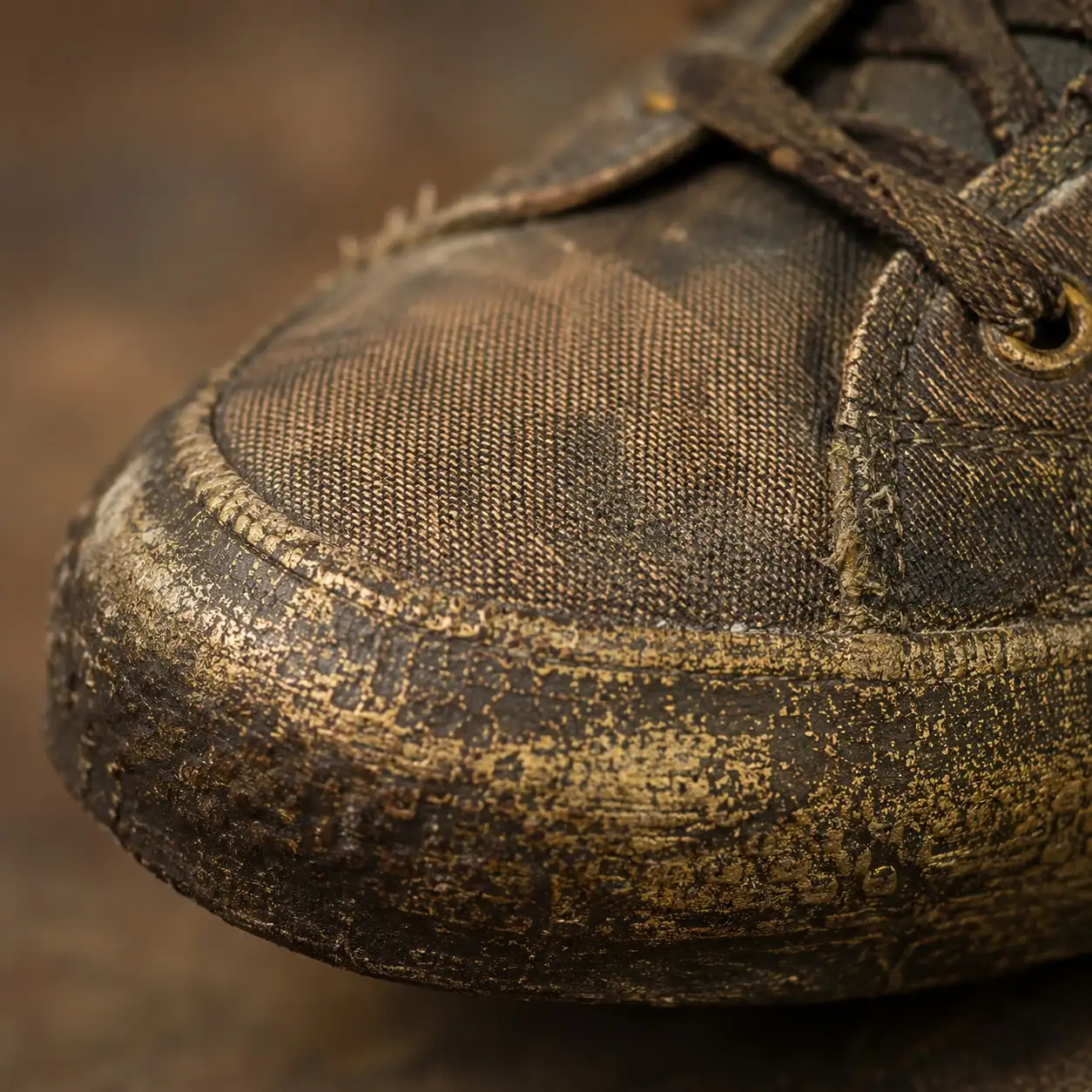
A technique few people know, and precisely for that reason it stands out. Textile is brought into a lasting form with a hardener: folds, movement and fabric structure remain visible in the final result.
Paverpol is a hardener that transforms textile, clay and natural materials into a fixed sculpture. The result retains the structure and drape of the fabric used.
What paverpol clay says
Where bronze and stone call for weight, paverpol is about movement. A sculpture in this technique seems to capture a moment: a coat caught in the wind, a gesture, a posture. That makes it suitable for personal pieces where a posture or character matters more than monumentality.
It is a niche technique, and that is part of the appeal: a sculpture in paverpol resembles nothing else in a reception space.
How we make it
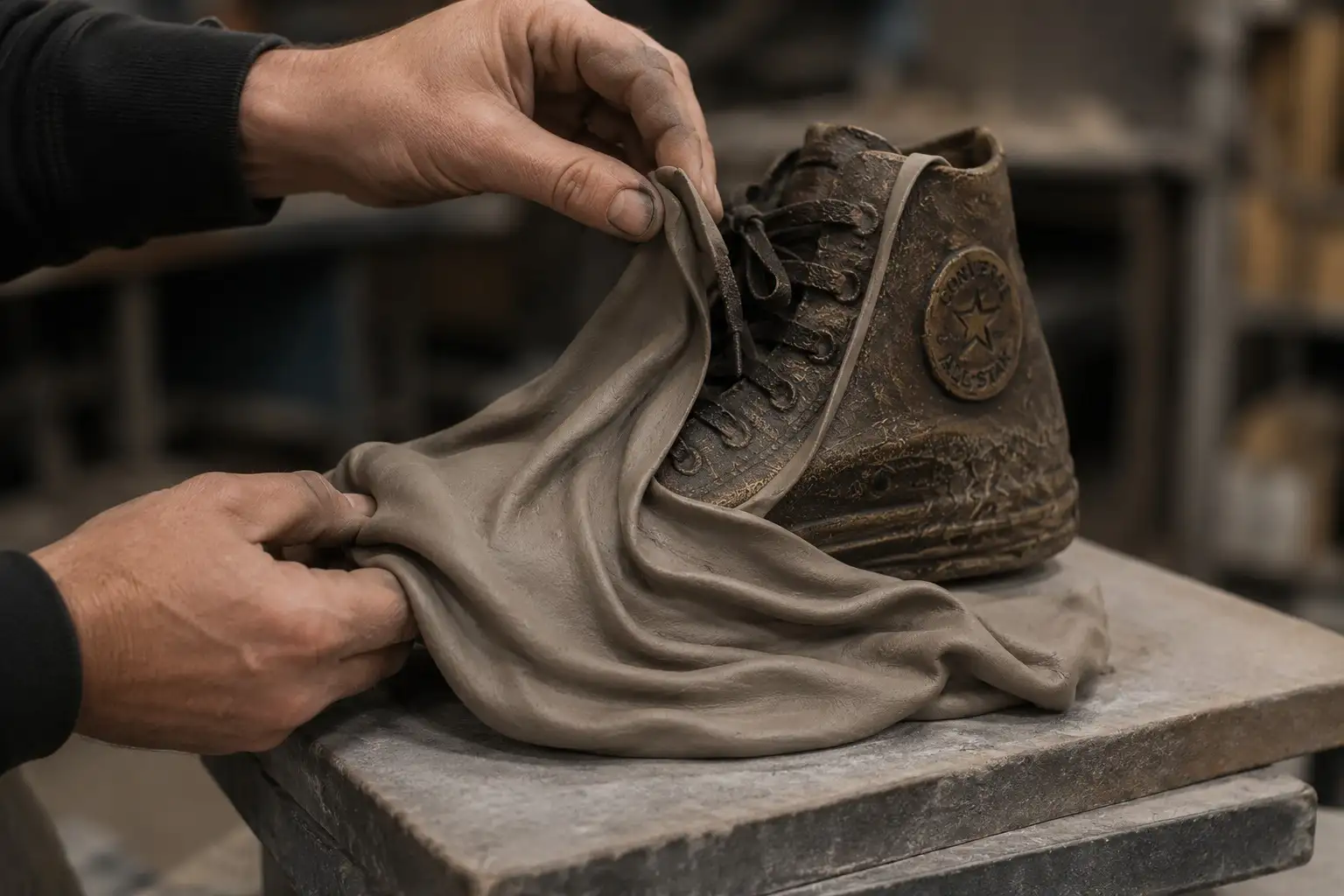
Textile is draped around a support structure and treated with the hardener. Shaping happens while the material is still pliable, which calls for speed and experience, because the drape is final once it hardens.
Once cured, the finishing follows: colouring, patinating or coating, depending on the desired look and the setting.
Where it fits
Mainly indoors. Outdoors is possible to a limited extent, provided the piece is well coated and placed in a sheltered spot; we do not recommend it for unsheltered outdoor placement. The technique suits mid-sized figurative sculptures; for monumental sizes or permanent outdoor placement, metal or 3D print are more suitable.
Ageing and maintenance
Indoors, the piece stays intact for years with a good finish. Moisture is the main enemy: a damp environment or direct rain will affect the material over time. Maintenance means dusting, gently and without water. Damage can be repaired to a limited extent.
Lead time and price
Shaping goes quickly, curing and finishing take time. In price, paverpol is more affordable than the cast metals; the difference mainly lies in size and finish.
Curious about paverpol?
Come and see it in the showroom - this technique needs to be seen in person to be understood.