MATERIAL
Bronzed: the look of bronze, honestly named
A tin alloy with a bronze finishing layer. It looks like bronze, costs less than bronze, and is not bronze - we always say so, on every quote and every certificate.
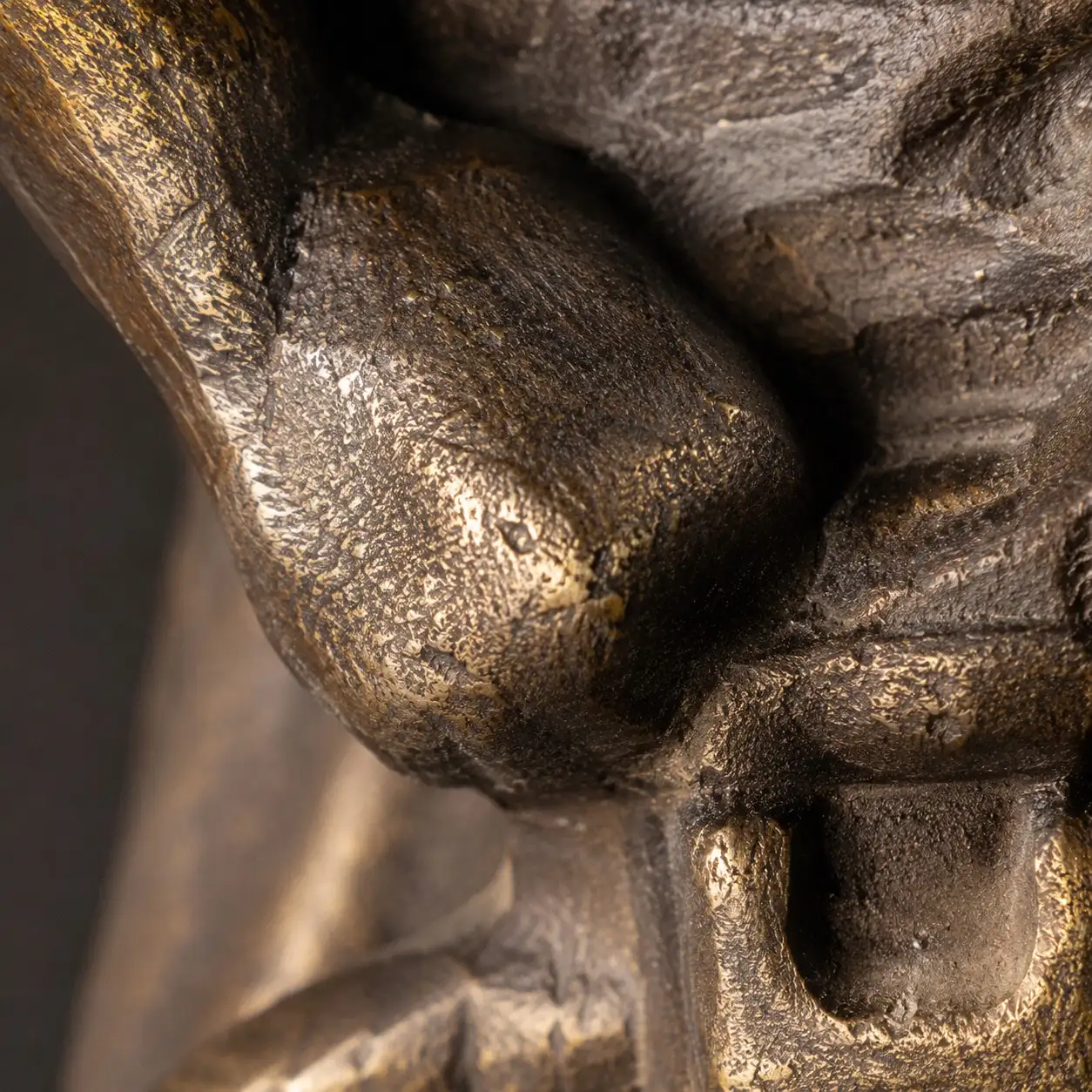
Bronzed means that a different material - in our case a tin alloy - receives a bronze finishing layer through a chemical and mechanical process. The result resembles solid bronze but is not: the metal underneath differs in composition, weight and lifespan.
What bronzed tin alloy says
Bronzed work is a sensible choice when the look of bronze is desired but budget or weight does not allow it. For a home-sized memorial sculpture or a series of relationship gifts at an unveiling, bronzed can be the difference between going ahead and not.
What it is not: a substitute for bronze in the full sense. Solid bronze builds up its own patina over decades and is virtually indestructible outdoors; a bronzed finishing layer is a layer, and layers wear. Those who want a sculpture for generations choose bronze. Those seeking the look within a different budget choose this - with open eyes.
How we make it
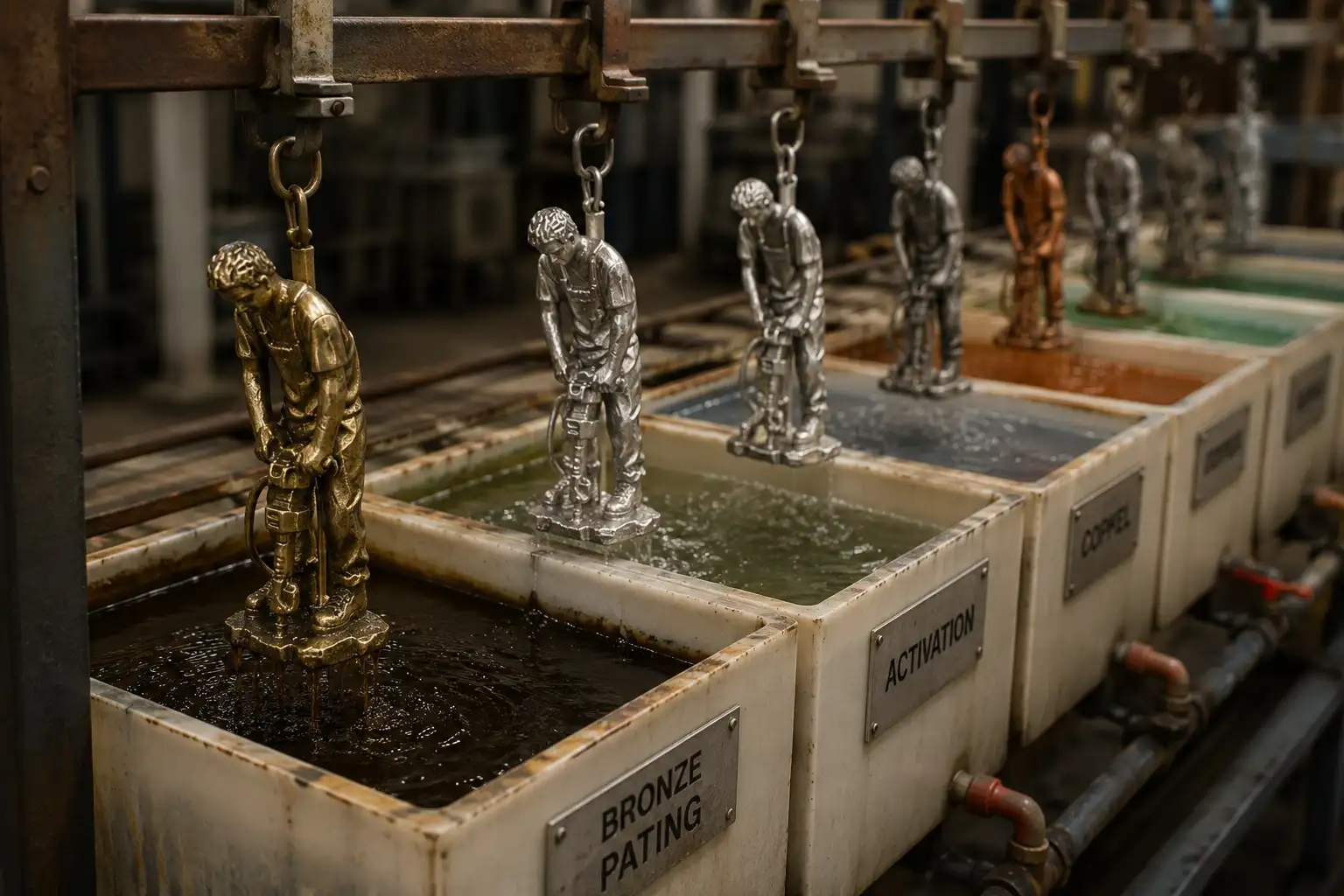
The sculpture is cast in a tin alloy, a metal that casts at a lower temperature than bronze and therefore allows finer detail. After casting comes the finishing: sanding, polishing and applying the bronze layer, which is then patinated as with solid bronze.
You see the difference in the trial step, and you may hold it next to solid bronze in the showroom - then you feel the weight and see the surface. We recommend that if you are in doubt.
Where it fits
Indoors without objection. Outdoors, bronzed work is more vulnerable than solid bronze: weather and UV put stress on the finishing layer. For a sheltered outdoor location it can be discussed with the right finish; for an unsheltered location we advise solid bronze or stainless steel. Fine detail work also often comes out sharper in tin alloy than in bronze.
Ageing and maintenance
The finishing layer is decisive. Indoors, a bronzed sculpture stays as placed for years; dusting is enough. Outdoors or in a frequently touched location, the layer can wear over time, especially on protruding parts. Repair is possible: the layer can be reapplied.
Lead time and price
Faster than solid bronze because the casting and finishing process is shorter. In price it is considerably more favourable than bronze; the difference lies mainly in the metal price and the number of finishing hours.
Torn between bronzed and bronze?
Come and feel the difference in the showroom, or let us think along about what suits the location and the budget.