MATERIAL
3D print: free in form, fast, honestly finished
Forms that cannot be made any other way, in sizes up to XL. We print this ourselves and finish every object by hand - and we tell you exactly what you get.
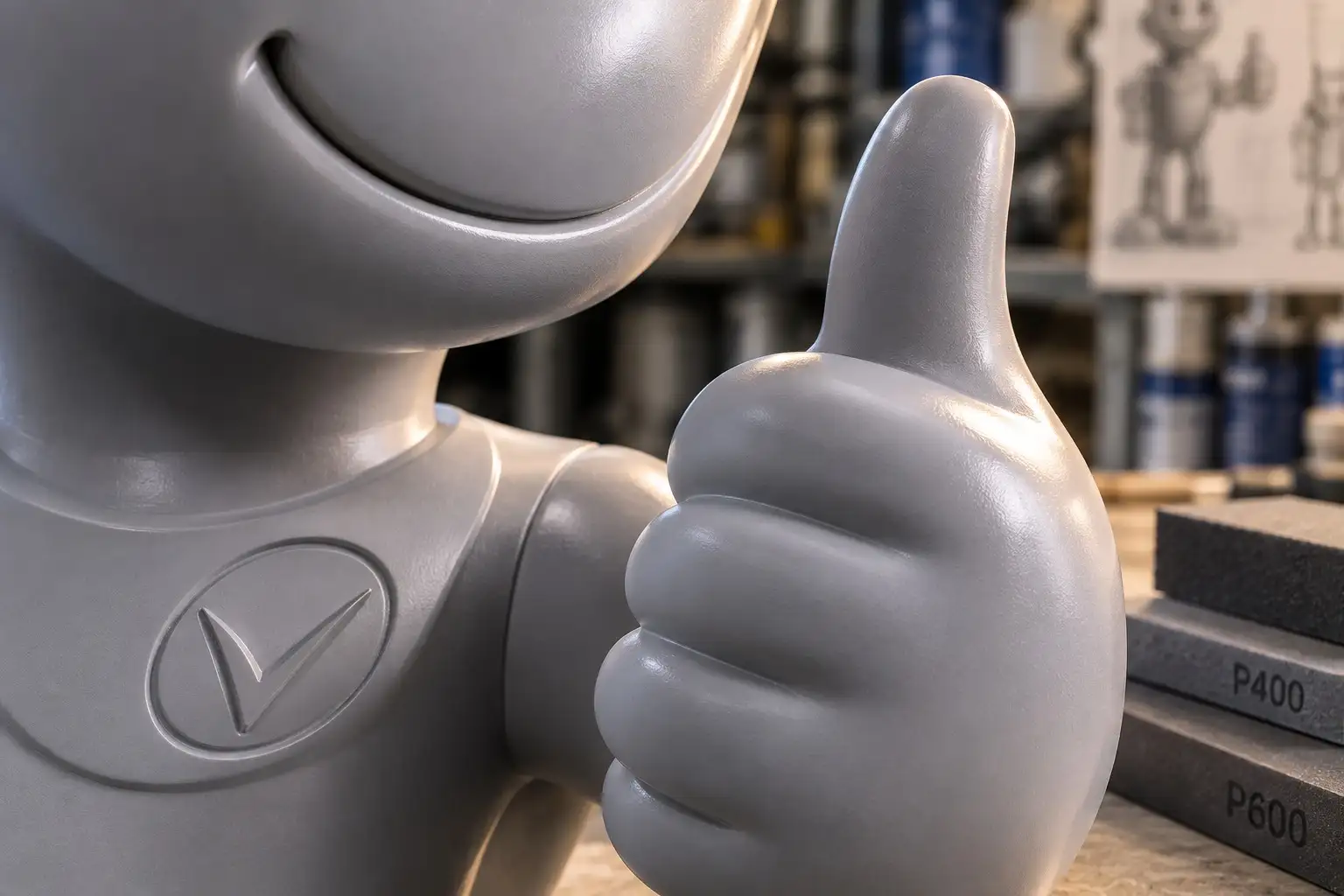
A 3D-printed sculpture is built up layer by layer from plastic and then finished by hand: sanding, filling, coating and spraying. The result is a lightweight object that can handle forms that casting or carving cannot.
What 3d print says
3D print is the material of now: it makes possible forms that are impossible with casting or carving - hollow structures, complex geometry, XL sizes you can still lift. For brand objects and campaign icons, it is often the only route to the desired size within the desired time.
3D print is plastic. We do not turn it into bronze and we do not call it bronze. What we do is take the finish far enough that the object looks and feels high grade - with a coating and spray work in the colour or texture that suits the design. Anyone who touches it feels a smoothly finished object, not print layers.
How we make it
The design is built up digitally - often the 3D visual from the trial step already forms the basis of the print file. Large objects are printed in parts that are then bonded and seamlessly finished.
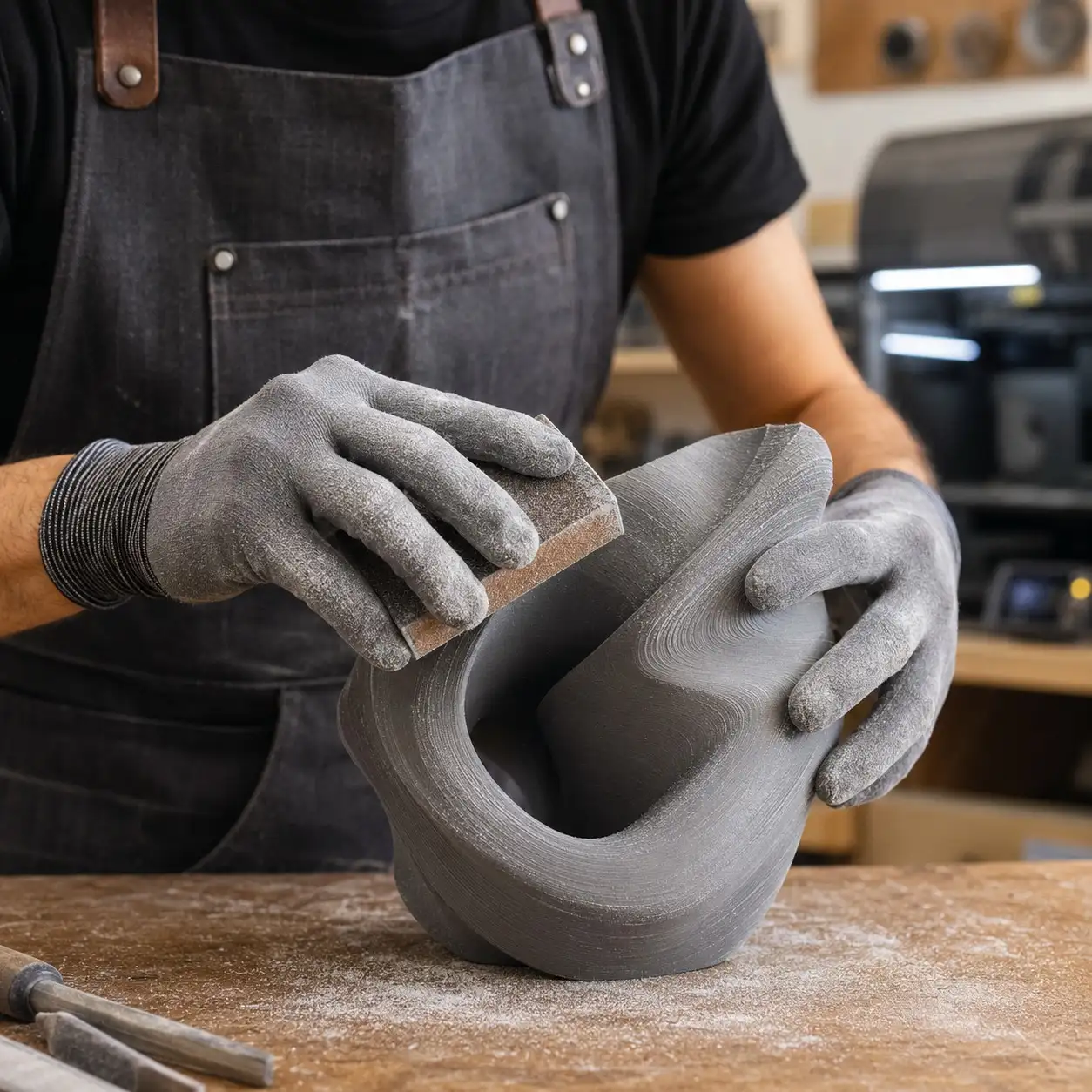
Then the handwork begins: sanding, filling, sanding again until the layer structure disappears, then coating and spraying. This finishing stage determines the end result more than the printing itself.
Where it fits
Indoors without limitation; outdoors provided the object gets the right coating and UV-resistant finish - we discuss that beforehand, since sun and weather demand more here than with metal. 3D print is the logical choice for large sizes with limited weight, for complex forms and for short lead times: a trade show piece that needs to be moved and reused, for example.
Ageing and maintenance
Indoors a printed object needs little: dusting, and a damp cloth for stains. Outdoors the coating is decisive; UV exposure and weather age plastic faster than bronze or stainless steel, and we say so upfront. Scratches and damage can usually be touched up - an advantage of the sprayed finish.
Lead time and price
Of all materials, 3D print is usually the fastest - printing continues while nothing is happening at the table. The finish determines the rest of the schedule: the higher the desired finish quality, the more handwork. In terms of price, the difference therefore lies mainly in size and finishing level, not in the printing itself.
An object in 3D print?
Send us your brief or design; we advise on size, finish and planning.